The automotive industry operates under extreme pressure in terms of precision, pace, and efficiency. The just-in-time model requires every component to arrive at the exact moment—neither earlier nor later: a single delay, a duplicated material code, or an approval that does not arrive on time can bring an entire production line to a halt. This operational fragility is compounded by the fact that the sector relies on highly complex supply chains, with multiple tiers of suppliers and quality and traceability standards that leave no margin for error.
In this environment, SAP in automotive acts as the “nervous system” that coordinates operations where global suppliers, synchronized logistics, and continuous maintenance converge. In fact, most automotive plants worldwide use SAP as their primary ERP, managing the logistics of tens of thousands of components per vehicle sourced from hundreds of suppliers. Each car may require the synchronized management of more than 15,000 unique components, which makes absolute end-to-end traceability essential to sustain production continuity.
However, while SAP provides a robust foundation for process integration, it does not always respond with the agility the business requires. When decisions must be made within minutes—without losing control, auditability, and traceability—specific operational challenges emerge that standard ERP functionality does not fully cover. For this reason, many automotive companies require specialized solutions that complement and reinforce their SAP system, adapting it to the realities of the plant floor and the supply chain.
Below, we outline the most common challenges in the sector and how to address them with tools aligned to these requirements.




Challenges of using SAP systems in the automotive supply chain
- Inconsistent information for critical components across plants: Each automotive plant typically has a certain degree of autonomy in its processes, which often results in the same components—such as an electric motor, a control unit, or a body part—being created differently in SAP depending on the location. This leads to multiple material codes for the same item, misalignment in global purchasing, and difficulties in consolidating stock or executing traceability campaigns in the event of defects. The absence of a centralized and validated master data model means that planning, procurement, and logistics are not speaking the same language, increasing the risk of errors and additional costs.
- Lack of operational control over purchase orders and imports: In the automotive industry, many key components are sourced internationally or through multi-tier suppliers. A customs delay or a change in the status of a purchase order can leave an entire production line without supply. While SAP allows users to consult scattered information, it provides baseline visibility, but often lacks consolidated, real-time operational tracking across procurement and logistics without complementary tools. As a result, teams are forced to rely on emails, phone calls, or manual reports to determine whether a delivery will arrive on time, compromising their ability to react to critical deviations.
- Need for fast purchasing and approval decisions without losing traceability: Production speed imposes extremely tight timelines for purchasing decisions, supplier awards, and approval of requisitions. An order for urgent spare parts or technical services cannot wait for a manager to return to their desk to approve it. In the absence of mobile solutions integrated with SAP, many decisions in automotive companies using SAP are made outside the system. This prevents the creation of a structured record explaining why a supplier was selected or under which criteria an expense was authorized, undermining traceability and regulatory compliance.
- Immediate on-plant recording of materials and maintenance to avoid discrepancies: On the automotive shop floor, every minute counts. If an operator withdraws materials from the warehouse and does not record the movement immediately, SAP stock levels become outdated and can cause production errors. The same applies to maintenance activities: if a technician services a robot and does not close the order in SAP right away, the equipment may appear out of service even though it is fully operational. The lack of mobile tools to record movements and activities at the point of use prevents SAP from reflecting reality in real time, leading to discrepancies and decisions based on incomplete information.
Strengthening SAP with solutions tailored to automotive
To address these automotive industry challenges, there are specialized SAP solutions that enable companies to tackle them effectively, ensuring production continuity, optimizing planning, and strengthening supplier relationships. Below, we review the main SAP automotive solutions developed by Innova, each focused on a key supply chain requirement.Master data consistency across plants
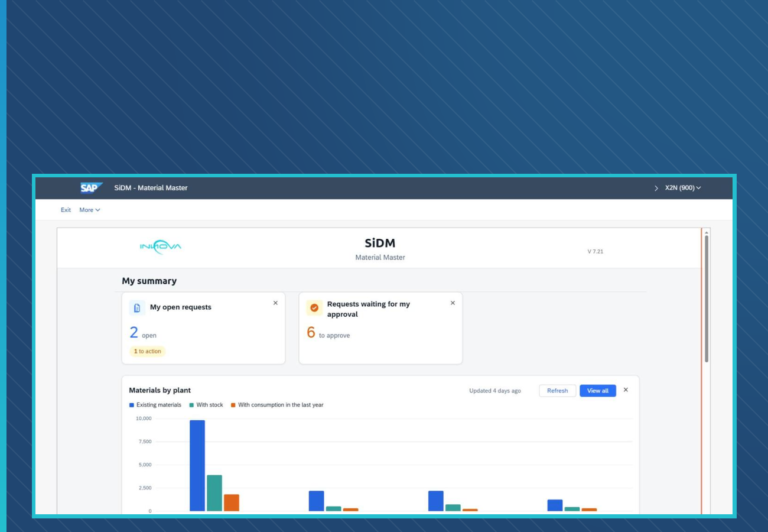
With the SiDM Materials solution, the quality and consistency of the SAP material texts master are ensured. Each time an automotive company creates a new component or material, the system automatically checks whether it already exists, applying business rules and cross-plant duplicate controls. This prevents the proliferation of multiple codes for the same part—a common issue in organizations with multiple production sites. In addition, SiDM enforces the completion of mandatory fields based on material type, ensuring that incomplete records are not created and later block purchasing, movements, or planning. Through its approval workflows, technical, purchasing, and warehouse teams can validate and complete the material record before it impacts SAP. In the automotive context, this results in a clean and reliable master data foundation, which is essential for managing critical components with precision.
Operational visibility over purchase orders and imports
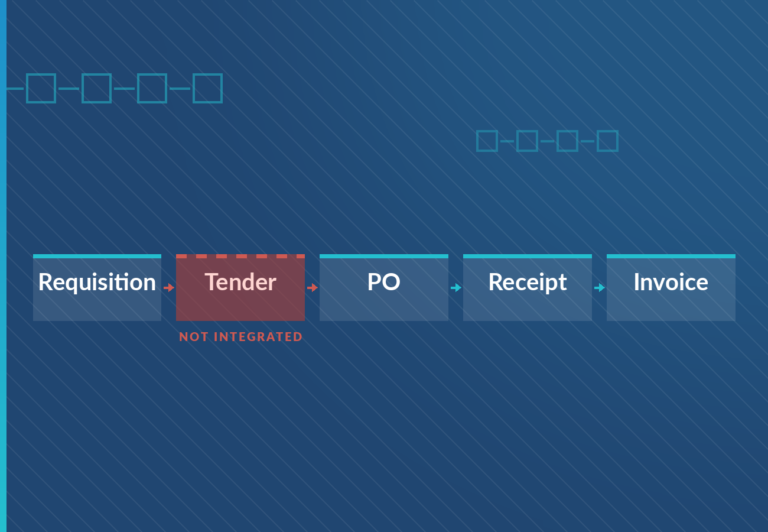
SiTRACK provides consolidated, near real-time tracking of the procurement cycle, from requisition to goods receipt. Every involved user—whether from logistics, planning, or production—can access a single view showing the up-to-date status of purchase orders, requisitions, and associated imports. This is particularly valuable for automotive companies with plants dependent on components manufactured, for example, in Asia, involving long transit times and complex import processes. The solution also centralizes comments, approvals, and deviations for each order, eliminating the need for emails to determine an order’s status. In the event of logistics delays, the system automatically alerts the responsible party, enabling corrective action before production is affected.
Agility in purchasing and approvals without losing traceability
SiGO digitizes and structures the entire sourcing and award process. Instead of managing quotations via email and spreadsheets, buyers can initiate a request directly from SAP, invite suppliers, and receive bids within the platform. All proposals are compared in a configurable matrix using technical and commercial criteria, creating a clear audit trail for every decision. SiLI, in turn, enables smart release processes in SAP by allowing approvers to receive contextualized approval requests via email or mobile, with all the information required to make fast, traceable decisions. Approvers can review price history, supplier risk, budget availability, and document context before releasing the request directly in SAP, without leaving the approval flow. This approach transforms traditional release strategies into agile, controlled smart releases, which is critical for authorizing urgent purchases or resolving bottlenecks without sacrificing governance or transparency—an essential requirement in the automotive sector.Real-time shop-floor recording of materials and maintenance
SiMA enables immediate recording of warehouse movements from anywhere on the shop floor. An operator can issue material by scanning a code from a mobile device, and the transaction is reflected in SAP instantly. This eliminates the gap between actual consumption and recorded stock, reducing planning errors and preventing interruptions caused by materials that “exist physically but not in the system.” SiPM allows maintenance technicians to manage orders and notifications directly from the field, without returning to a workstation. They can close orders, attach photos, record spare parts used, and release equipment in SAP as soon as the intervention is completed. This improves task traceability, accelerates planning, and reduces the risk of outdated information in environments where every hour of machine downtime carries a high cost.Efficient coordination with suppliers
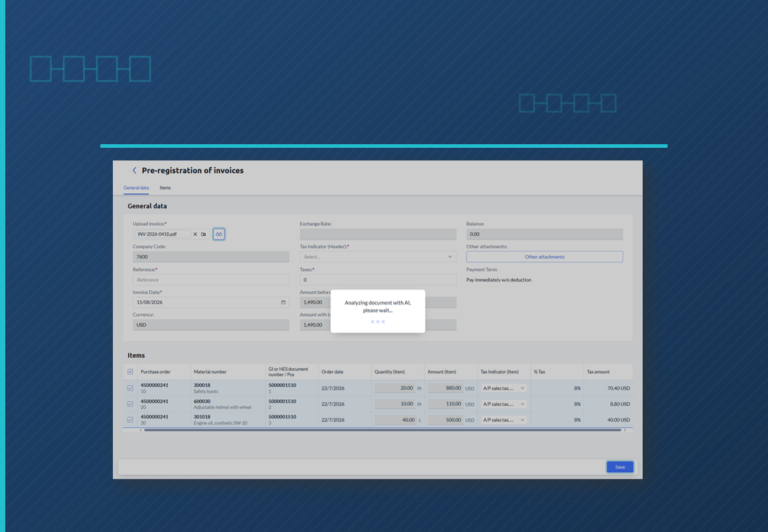
Finally, it is essential to highlight a tool highly valued by many automotive companies that have implemented it: the supplier portal. SiPRO acts as a supplier self-service portal where suppliers can view their purchase orders, confirm deliveries, manage supplier invoices, and check payment statuses. Instead of contacting purchasing for every question, suppliers access their information directly through a secure web interface. This reduces internal operational workload, improves transparency, and minimizes communication errors. In addition, SiPRO centralizes messages and documentation associated with each order—such as quality certificates or delivery notes—creating a complete system record. This level of traceability is critical for auditing deliveries, managing claims, and documenting compliance for key vehicle components.