
Life Sciences operates in an environment where regulatory pressure is not an “add-on” to the business: it is part of the process itself. Audits, inspections, quality reviews, internal validations, and controlled changes coexist with the daily need to produce, release, purchase, and supply without friction. In this context, SAP systems in Life Sciences typically act as the central backbone where data, transactions, and evidence are recorded. However, companies in this sector often face difficulties when it comes to controlling the information that feeds these processes throughout their entire lifecycle.
In SAP environments for Life Sciences companies, as well as in other businesses such as pharmaceutical companies that run SAP and are subject to GxP compliance, a large part of compliance depends on the quality and control of master data.
In this article, we address the challenges we have observed through our experience in this sector, with a particular focus on master data–related issues, and how agile solutions can be applied to address them effectively.

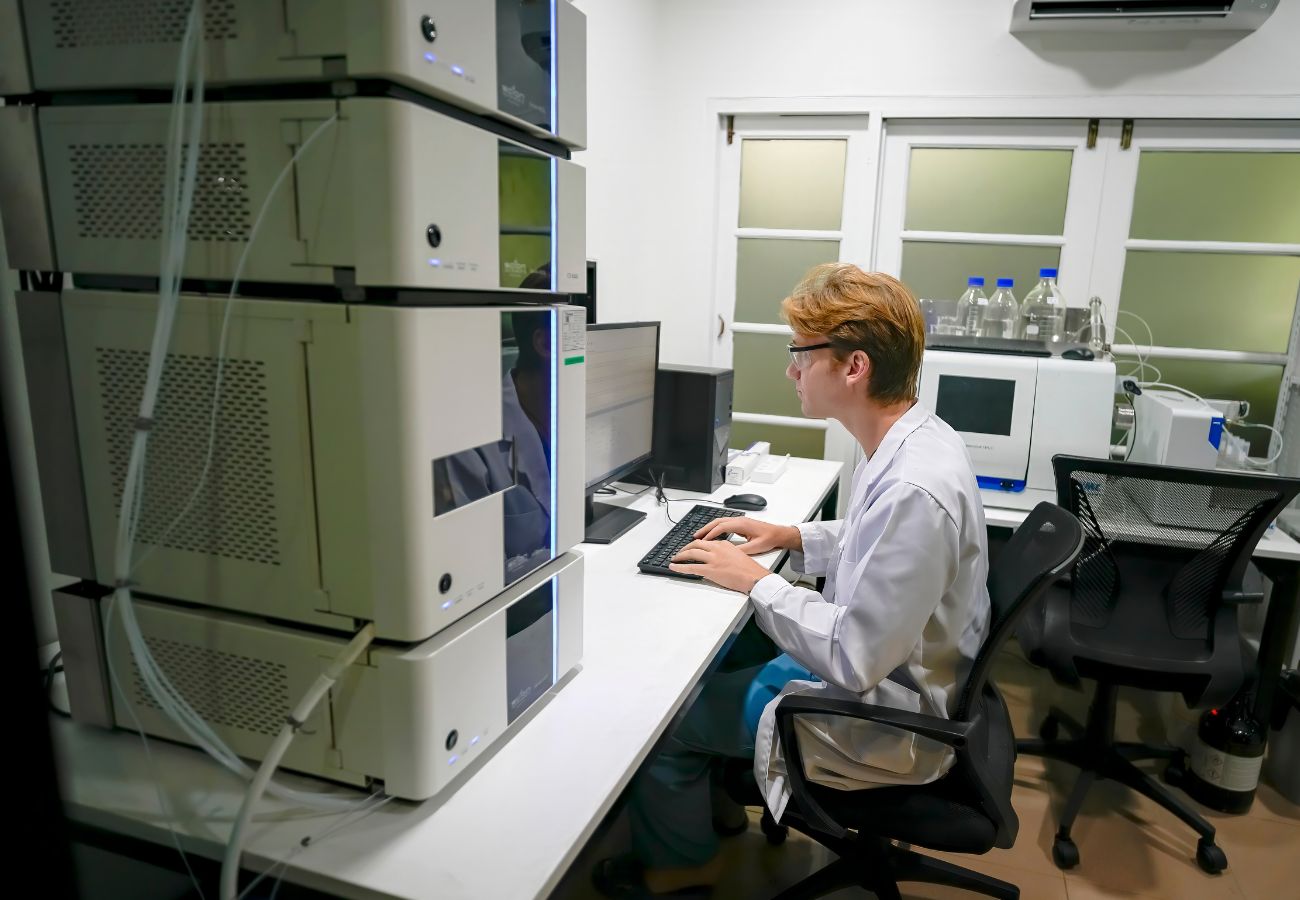

The main challenges for Life Sciences companies in SAP. What is the sector currently facing in its daily use of SAP?
Materials, suppliers, associated documentation, changes to sensitive fields, and approval traceability directly condition critical processes: purchasing, goods receipt, manufacturing, quality management, packaging, distribution, and reporting. From this point on, there are three operational fronts where SAP systems used in Life Sciences companies are typically under the most strain: compliance over data and processes, version and artwork control in packaging, and supplier governance under regulatory requirements:Compliance control over data and processes
In SAP for Life Sciences, compliance does not rely solely on procedures; it depends on the system’s ability to demonstrate traceable control over data and its lifecycle. Problems arise when SAP is used in a fragmented manner and data governance is spread across emails, spreadsheets, and informal decisions. In these cases, it is not “SAP” that fails as such, but rather the consistency with which records supporting regulated processes are created, changed, and approved. When data governance is weak, recurring symptoms usually appear:- Insufficient traceability of relevant changes and their approvals.
- Unclear responsibilities between the requester, the data completer, the reviewer, and the approver.
- Inconsistent validations depending on the user or the channel used to create or modify data.
- Rework and transcription errors due to reliance on external tools (Excel, email).
Packaging version control in production
In Life Sciences, versions, artworks, approvals, and validity periods are part of product control. Risk arises when packaging master data and its change control are not designed to enforce operational discipline within SAP for a business with the specific needs of Life Sciences. In practice, failures tend to concentrate in three situations:- Use of non-approved or obsolete versions in productive environments.
- Misalignment between the material master record and the correct documentation or artwork.
- Changes without a clear workflow, or without rules that enforce completion and validation of critical data before the material is activated.
Supplier management under regulatory requirements
In SAP for Life Sciences, a supplier is not just a purchasing third party; it is an entity that must meet documentation requirements, internal validations, and full traceability during creation and maintenance. When this process relies on external channels, control becomes fragile and costly to sustain. The most frequent issues when supplier creation and maintenance are handled outside the system include:- Manual processes based on emails, spreadsheets, and forms.
- Dispersed documentation that is hard to consult and easy to lose.
- Difficulty auditing changes to sensitive data (for example, bank details or payment terms).
- Risk of duplicates due to a lack of preventive controls.
Strengthening SAP for Life Sciences with data-governance-aligned solutions
Strengthening SAP for Life Sciences does not mean replacing the system or adding parallel layers of control outside the ERP. This is where these INNOVA solutions such as SiDM Materials and SiDM Suppliers fit, acting precisely on the points where SAP standard does not always guarantee consistency, traceability, and control. To address the challenges described above, two solutions are particularly relevant: SiDM Materials and SiDM Suppliers. Both are designed to structure the creation and maintenance of master data in companies that require rigorous control, such as those operating SAP in Life Sciences, ensuring that critical information is managed in a controlled way from the outset.SiDM Materials to govern the material master in SAP Life Sciences
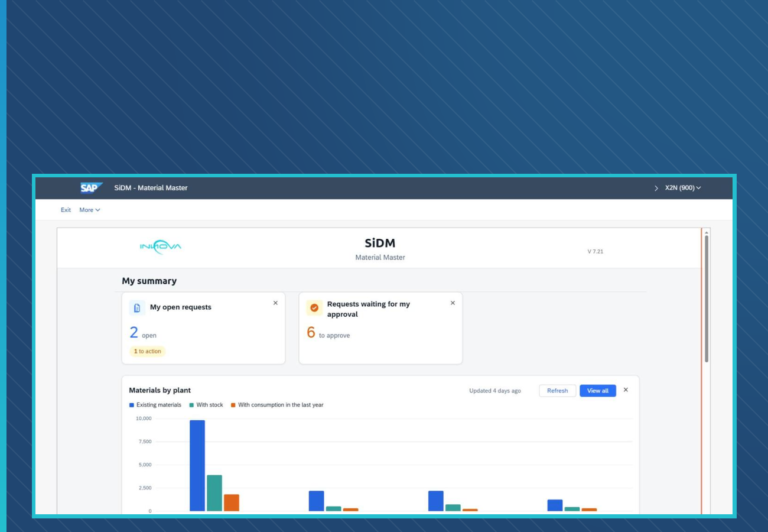
In a SAP Life Sciences environment, the material master is the starting point for key processes. When information is managed with clear rules from creation through change, the system gains stability and reliability over time. SiDM Materials is specifically designed to reinforce this data governance, preventing inconsistencies or errors from entering SAP and providing operational traceability for every modification. Now, with our artificial intelligence-based service that automatically determines the business rules governing material masters, we can help you extract the rules from your own data. In practice, the solution acts on the elements that determine master data quality by structuring how materials are created, completed, and changed. It introduces rules and workflows that enforce a homogeneous way of working within the system, regardless of the department or user involved.What it brings to daily operations
From an operational perspective, SiDM Materials ensures that material creation and maintenance take place within a controlled framework, where critical information is not dependent on downstream validations but is enforced during the process itself. This results in:- Prevention of duplicates through objective criteria defined directly on the data.
- Assurance that materials are correctly extended to the required views and organizational units.
- Validation of critical fields to avoid errors that impact downstream processes.
- Coordination of the different roles involved in material creation and change.
Consistent control of versions and artworks in packaging materials
For packaging materials, Life Sciences requires an additional level of discipline that must be reflected in the SAP system. SiDM Materials enables the application of specific rules for these materials, ensuring that relevant information is completed, validated, and approved in a structured way before the material becomes operational. The solution includes capabilities aimed at avoiding duplicates and ensuring data consistency, such as:- Duplicate detection based on key fields, text, or classification characteristics.
- Rules that ensure completeness of information across views and organizational units.
- Validation of critical fields, including non-standard fields.
- Workflows that structure the participation of the different responsible roles.
Change traceability and master data maintenance
Beyond creation, SiDM Materials reinforces ongoing master data maintenance. Each modification is managed through defined workflows, with clear roles and traceability of what was changed, when, and under which approval. This ensures that knowledge about the data is embedded directly within the SAP system, reducing reliance on informal practices. The solution also supports data maintenance and cleansing tasks by identifying incomplete or erroneous materials and allowing corrections under defined business rules. In Life Sciences, this approach is essential to prevent the gradual degradation of the SAP information system.SiDM Suppliers to structure supplier creation and maintenance in SAP Life Sciences
In Life Sciences, supplier data is another highly sensitive element within SAP. SiDM Suppliers addresses this area by structuring supplier creation and maintenance through controlled processes, centralized documentation, and defined approval workflows. The solution is designed to integrate a homogeneous process within SAP that reduces manual workload and reinforces traceability from the first interaction with the supplier.Strengthening a structured process in Life Sciences
With SiDM Suppliers, supplier management no longer depends on scattered exchanges and is instead handled through a centralized process. The solution includes a portal that allows suppliers to enter their information, while the internal team manages the request within SAP using validation and approval workflows. This approach reduces rework and improves the quality of data entering SAP, as information is captured in a structured way and validated before being created or modified in the system.Document control integrated into the process
Another key element is document management. SiDM Suppliers centralizes documents associated with each request and allows them to be stored in corporate document management systems, while always maintaining the link to the supplier creation or maintenance process. This enables companies operating SAP in Life Sciences to preserve documentary traceability related to suppliers, facilitating consultation and reducing the effort required to respond to internal or external audits.Segregation of duties and change auditability
The solution also reinforces segregation of duties and auditability. Workflows clearly define who requests, who reviews, who approves, and who creates or modifies the supplier in SAP. In addition, a detailed change log for sensitive data is maintained, including previous and new values, dates, and responsible users. These capabilities allow a Life Sciences business to maintain consistent control over supplier data throughout its lifecycle, aligning daily operations with the requirements of a regulated environment.