
In the agribusiness industry, those of us operating within SAP environments understand that planning is not a theoretical office exercise. It is a critical race against the clock, dictated by uncontrollable crop cycles, highly perishable products, and extremely narrow harvesting windows.
In our experience, we have observed that many market leaders end up managing the core of their campaigns through external spreadsheets. This disconnect occurs because Standard SAP often fails to absorb the volatility of the field, turning operational planning into a reactive process.
In this article, we will show you how to transform your system into a genuine competitive advantage, eliminating Excel dependency and ensuring fluid operations through the efficient use of MRP (Material Requirements Planning). It is not simply about executing a transaction; it is about ensuring that the flow of information—from the field to the plant—is integral and real-time. Addressing operational and supply planning in the agro-industrial sector requires understanding that, in a sector characterized by intensive campaigns, any failure or delay severely compromises business operations.
Technical Challenges and Inefficiencies in Agro-Industrial Planning with SAP
Distorted MRP Calculations and Obsolete Parameters
The SAP planning engine is a logical system that depends entirely on the quality of input data within the Material Master. A recurring challenge we encounter is the presence of committed purchase requirements driven by a deficient database in the MARA and MARC tables.
Duplicate records or errors in critical fields, such as Units of Measure (UoM), cause the system to generate order proposals that bear no relation to actual warehouse reality. Within the context of SAP MRP execution in agribusiness, using static planning parameters—reorder points and safety stocks that haven’t been updated in years—ignores seasonal demand. This rigidity triggers unnecessary Purchase Orders or, worse, fails to detect needs until a stockout is inevitable, generating logistics overcosts due to urgent shipments.
Running MRP under these obsolete parameters is a recipe for operational chaos during peak harvest, where an error in the Valuation Class or the Planned Delivery Time in the Info Record can paralyze the entire supply chain.
Perishables Management and FEFO (First-Expired, First-Out) Analysis
In SAP environments for agribusiness, time is relentless. The lack of an integrated FEFO analysis in requirements planning prevents the optimization of critical inputs like fertilizers, pesticides, or ingredients with limited shelf life.
The standard system often struggles to automatically prioritize the issuance and use of materials based strictly on expiration dates. When inventory turnover is not aligned with batch expiration, waste increases exponentially, directly impacting profitability.
We have verified with various clients that this technical gap significantly complicates Batch Management during high-intensity campaigns, where the speed of warehouse movement exceeds the manual control capacity of operators.
Consequently, direct product losses occur for items already paid for that must be destroyed due to technical obsolescence. Optimizing MRP in SAP-based agribusiness requires the system to automatically identify the oldest batches to ensure consumption follows freshness criteria, minimizing the economic impact of operational waste and ensuring compliance with food quality regulations.
Lack of Anticipation and Limited Procurement Visibility
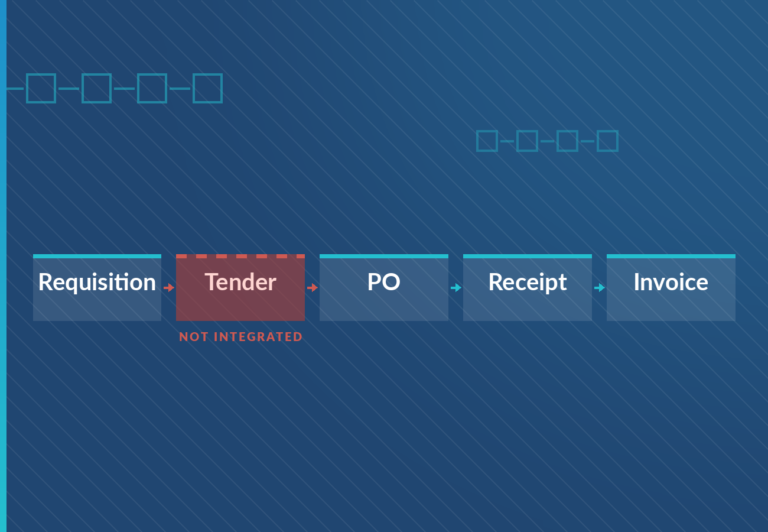
In SAP, there is often a lack of end-to-end, real-time visibility regarding the actual status of purchases—from the moment the Purchase Requisition (PR) is issued until the final Goods Receipt (GR) is processed. This prevents planners from performing proactive impact analysis when deviations occur in operational planning.
In our experience implementing SAP solutions in agro-industrial environments, we have observed that without integral visibility of supplies feeding the requirements calculation, planners are forced to work with stale data. This creates a critical gap between the system’s supply proposals and the plant’s physical execution capacity.
Using MRP without real-time data integration condemns the business to reactive management based on spreadsheets and external communications to confirm the arrival of critical materials like packaging or labels—an inefficient and unsustainable operation during peak harvesting periods.
Operational Rigidity and Field Approval Bottlenecks
Field operations in the agro-industrial sector often take place far from administrative control centers, yet they are frequently stalled by rigid approval workflows that require a manager to be physically present at a terminal. The inability to quickly consult budgets, historical prices, or stock status from the field generates delays in critical decision-making for MRP.
Standard SAP lacks the flexibility to modify plans in response to sudden changes, such as an unexpected advance in crop ripening. This lack of mobility creates a deep disconnect between the technical office and field reality, forcing managers to act outside the system. This compromises the integrity of SAP MRP execution, as the system no longer reflects actual purchasing and consumption, leading to a chain of failures in future requirements calculations.

Innova Solutions: Technical Response to Optimize SAP in Agribusiness
To resolve the challenges addressed above, Innova integrates a suite of native SAP applications that complement SAP in agro-industrial environments without requiring Z-developments from your team or activations of additional SAP components. The result: MRP execution that is agile, precise, and results-oriented — fully aligned with your existing authorization model.
SiMPL: Native MRP Execution Built for Campaign Reality.
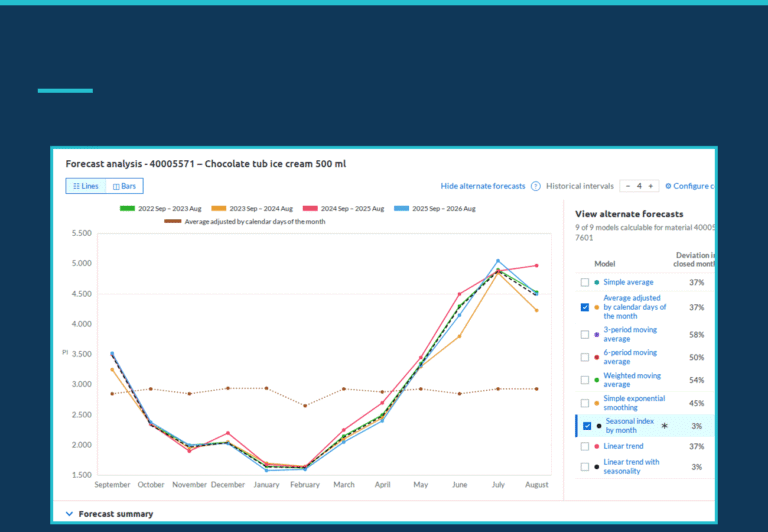
SiMPL is the planning cockpit that replaces the spreadsheet. It runs MPS, MRP and MRP Live natively in SAP, with a UX designed so planners actually use it. Key capabilities for agro-industrial campaigns:
- Coverage analysis over your full horizon — initial stock, receipts, issues, projected balance and shortfall/over-coverage alerts in one screen.
- Layered FEFO algorithm for projected lot maturity — anticipates expiration risk on perishable inputs before it hits the P&L.
- Planning master data on auto-pilot — recalculates lead time, safety stock and reorder point from real SAP history, eliminating the obsolete parameters that distort MRP.
- Mass conversion of planned orders — with grouping criteria and source-of-supply determination, turning MRP output into firm requisitions in minutes.
SiDM Materials: Shielding the Foundation of MRP
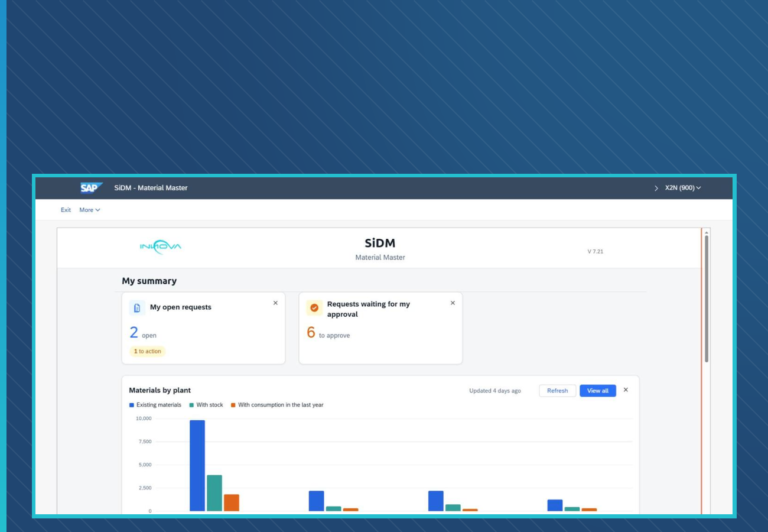
The solvency of operational planning begins with Master Data quality. SiDM Materials acts directly on the root causes of faulty planning:
- Critical Field Validation: Ensures every material created in transaction MM01 complies with automatic business rules, guaranteeing that Units of Measure and planning parameters in the MARC table are correct from the start.
- Technical Duplicate Detection: Based on EAN, OEM, and technical descriptions to eliminate system “noise,” ensuring MRP considers consolidated total stock rather than fragmented redundant records.
- Automated Plant Extension: Allows materials to be mass-extended with all necessary MRP views when new collection points open, avoiding “material not maintained” errors during the campaign.
- Know-how Custody: Centralizes planning rules within SAP, preventing procurement logic from depending on external manuals or user memory.
SiMA: Real-Time Inventory Integrity for MRP
For SAP requirements planning to be reliable, the system stock must mirror physical reality. SiMA eliminates the “paper trail delay” through advanced mobility:
- Instant Postings: By performing receipts, transfers, and consumption via QR or barcode scanning from mobile devices, the MARD table (Storage Location stock) updates instantly, allowing the next MRP run to work with real balances.
- Field-Level Batch & FEFO Management: Facilitates capturing expiration dates at the point of receipt. That clean batch data is what feeds SiMPL’s projected lot maturity analysis, closing the loop between warehouse reality and planning.
- Photographic Evidence and Geolocation: Attaches digital support to material documents, ensuring the stock recorded for planning is compliant in quality and condition.
- WM/EWM Compatibility: Integrates with bin-managed warehouses, ensuring material availability is precise for production order staging.
SiTRACK: Total Supply Chain Control
MRP usage is optimized when the buyer has full visibility over what the system has requested:
- Certified Tracking Monitor: Offers a single point of entry to visualize the purchase lifecycle—from ME51N to the invoice—identifying delays that would impact MRP execution.
- Contract and Outline Agreement Identification: Automatically detects if a requirement generated by MRP can be covered by an existing contract, accelerating conversion and securing negotiated prices for the campaign.
- Direct Supplier Communication: Reduces response times to incidents through an integrated communication channel, preventing the planner from relying on external emails to confirm critical transits.
SiLI: Mobile Approvals for Uninterrupted Planning
An efficient MRP generates requisitions that must be converted into orders rapidly. SiLI removes the administrative friction that stalls supply:
- Mobile Release: Operations managers approve purchase documents from anywhere, ensuring operational planning translates into firm Purchase Orders without waiting.
- Consolidated Decision-Making Data: The approver views budgets and historical consumption at the moment of signing, guaranteeing informed decisions that protect business cash flow.
- Standard Strategy Integration: Respects existing SAP S/4HANA or ECC release configurations, guaranteeing the security and traceability required for campaign audits.
Improve Your Agrobusiness SAP Planning Without Complications
The consequence of executing MRP in SAP based on erroneous data or slow processes is the direct deterioration of agrobusiness campaign margins.
Implementing these capabilities in your SAP environment does not require a six-month transformation project, Fiori migrations projects, or years of consulting. Innova applications are designed for rapid deployment in both SAP ECC and SAP S/4HANA — installed as standard SAP transports and leveraging the release strategies and authorization models your organization already uses and trusts. Most clients go live in a matter of weeks, not months.
Innova supports four deployment architectures (SaaS, On-Premise FES, Fiori on-premise, or SAP BTP), so you choose the option that fits your IT stack — not the other way around. Supply management and SAP planning should not be the bottleneck of your campaign; they should be the simplest part of your operations.
See it for your self: book a 30 to 45-minute technical session and we’ll show you exactly how SiMPL, SiMA, SiTRACK and SiLI map to your agro-industrial planning challenges.